Larema Dixon grew up in southern Virginia in the Shenandoah Valley. She always adored drawing and reading as a child, and in elementary school she started making up fantasy worlds and stories for her sister and friends to act out. Her writing hobby naturally developed as she began documenting lore and their adventures. In middle school she began writing short stories, and the more she wrote, the more she became interested in grammar, syntax, and editing. By high school she was winning national contests for her short story pieces, and she began writing her first book. Although the first draft of her novel, Snowborn, was finished by 10th grade and the sequel was already in the works, she didn’t have the money to publish or visit a professional editor. She hoped to be able to fulfill her dreams of publishing by college, but tragedy struck her family as soon as she graduated from high school. Her mother was diagnosed with brain cancer, and her parents’ jewelry store, which had been the family business for two generations, closed due to the economic recession. She worked throughout college to pay tuition and support her family, but continued to write and edit her stories when she had the time. After graduating college in 2019, she became the Associate Director of a special needs camp, and finally was able to officially get her novel edited and published in 2020, seven years after completing the rough draft manuscript.

Snowborn is available via the following venues:
Amazon: https://amzn.to/3lJrOqE
Barnes and Noble: https://www.barnesandnoble.com/w/snowborn-larema-dixon/1138004178?ean=9798693012820
Website: https://icequeennovels.wordpress.com/

What sets your book apart from all others?
Snowborn is a mix of fantasy and science fiction, with a focus on the disastrous effects technology can have on cultures that don’t fully comprehend them, and the dangers of revenge. People have a dark tendency to let their emotions get the best of them, and sometimes they do things in the name of love that can warp who they are.
For example, losing a loved one in a tragedy often leads to pinning grief and hatred on someone or finding something to blame. We naturally look for a source for negative emotions, but that isn’t a healthy way to move on or honor a loved one’s memory. Through Snowborn, I touch on loss and coping with death, as I found writing was one of the many ways to help me overcome the loss of my mother. But Snowborn is also a fun tale full of quirky characters, magical adventures, and personal growth and discovery, which I hope my readers enjoy and learn from.
Who should be reading your book?
My book is appropriate for young adults. The best audience is between the ages of 14 to 27, but I made it free of profanity and sexual content so middle schoolers, with a high reading level, would also be able to enjoy it, as I was reading at a 12th grade reading level by 6th grade and want to encourage kids like me. However, anyone who enjoys fantasy, magic, science fiction, adventure, and fairytales will love it as much as I do.
What authors inspired you most and how so?
I have a number of favorite authors. Lewis Carroll, Jane Austen, C.S. Lewis, and Tolkien were some of my favorite classics, and their elements of romance, travel, otherworldly wonders, and lore shaped my imagination. I love Scott Westerfeld, particularly his Leviathan and Uglies series, with his historical fiction elements in the former and the science fiction in the latter, inspiring my tales. The Ranger’s Apprentice series by John Flanagan holds a special place in my heart for its rich world building, and the Artemis Fowl series by Eoin Colfer inspires the concept of the young genius protagonist in Snowborn. I also loved reading Orson Scott Card’s Ender’s Game series, which shaped a few of my ideas for my grander universal design.
What advice do you have to offer in support of other authors?
Follow your dreams. Even if you’re not a best-selling author, or you don’t have the money for a multi-tiered marketing campaign, it’s okay. At the end of the day, write for yourself because you love your work, and hope others see the love you put into your writing.
What are your genres of choice and why? How did you come to write in those particular genres or niches?
Fantasy and science fiction are my passions. I grew up on The Chronicles of Narnia, Agatha Christie mysteries, and Star Trek, and those genres make me the happiest when I curl up with a good book.
How’d you come about discovery of your writing talent, gift or ability?
As mentioned above, I started out creating stories, telling them to my friends and family, and acting them out as a role playing game for most of my childhood. In middle school I finally started writing my stories down, and when I began writing Snowborn in high school, some of my friends “subscribed” to my writing. It was a funny way to push me to finish my story, but with so many different people wanting to know what happened next, I realized I might have some talent. When I began submitting short stories to completions for high school kids, (which is a program in which students receive a high school diploma in preparation for university entrance in the United States), and winning awards, my writing confidence grew.
What are your future writing endeavors? What’s next on your authorship agenda?
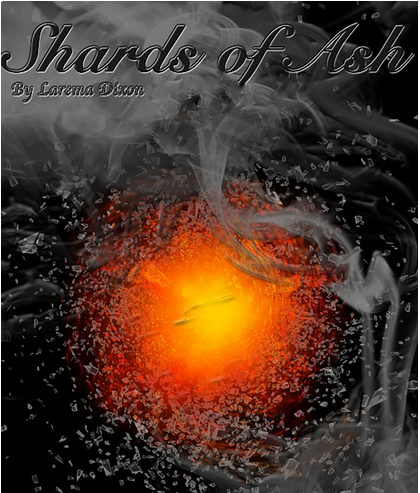
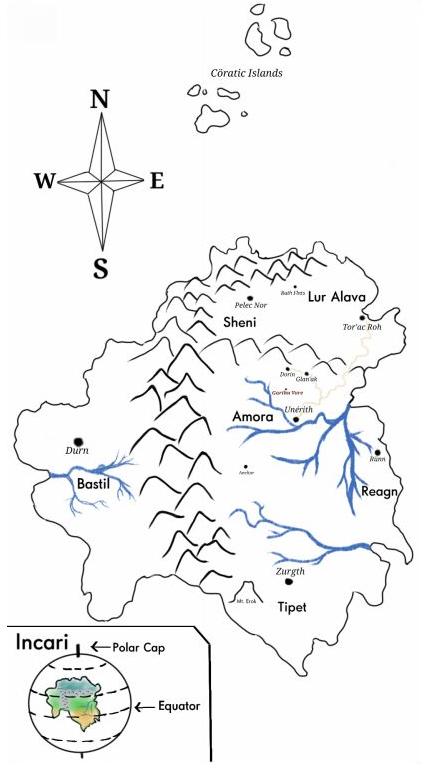
My next book, Shards of Ash, is in its final phases of editing. As soon as I have the money, it will be going off to the editor! I’m also working on my third book, Into the Void, although I’m only about sixty pages in with a long way to go.
Is writing for you synonymous with living and breathing, or just something you do as a hobby, and how so and why?
Growing up, I knew how difficult it was to become an author for a living. It’s hard to get your book out there with so much competition, especially when you are poor and supporting your family and your future. For me, writing has always been my passion, and my job is my “cover story” or my way to make ends meet in order to be an author.
What changes in the literary world would you most like to see?
I feel it’s unfair how much poverty disadvantages new authors. As I’m from a poor family, life has always been an uphill battle. Being an indie author is no different, as it’s incredibly difficult to get your story out to the world without a good platform to do so. I think it would be amazing to have libraries and book stores feature indie author sections more prominently, not just the “in” books from the big name authors.
Indie/Self-Published Author and/or Traditionally Published? What do you favor more and why?
Self-publishing is much more obtainable for someone right out of the gate. For example, because my book is on the longer side, traditional publishing wasn’t an option for me. As print is a dying medium, publishers don’t like to take chances on long works from an unknown author, specifically because of the printing costs. Even if your work is good, convincing a publisher is difficult with a book as long as mine, as they don’t want to take the risk. With Indie publishing, you have more control over profits, prices, and publication. The biggest drawback, of course, is self-marketing.
How is your writing controversial, profound or mind boggling, or how would you describe it?
Although Snowborn isn’t controversial in itself, my future books will thematically bring into question the existence of gods, the thin line between protagonists and antagonists, equality, racism, and morality. Snowborn specifically addresses some elements of time travel, time distortion, and alternate timelines, which can be considered “mind boggling” if those types of science fiction aren’t someone’s cup of tea.
What do you hope to accomplish with your literary creation? What change or enlightenment do you want to bring about in your reader if any?
Snowborn is, at its heart, the tale of a villain, but the character won’t start off that way. I adore a good villain story, like the movie Maleficent or the webtoon Unordinary. I believe every person has a story, and even “evil” people are often misunderstood or have gone through traumatic events to shape them into the villain. As a species, we are quick to hate others without understanding where they come from, and I hope my readers take away that message from my books.
What’s the greatest compliment that you ever received regarding your literary accomplishments and what did this remark do for you, how did it transform your life or your writing?
I still remember my babysitter’s shocked expression as she flipped through my massive binder, full of detailed planetary depictions, stories, character sketches, and even rudimentary languages, as she uttered, “This is the most in-depth children’s game I’ve ever seen.”
I was only ten or eleven at the time, and it had never occurred to me that my “Zata book” was out of the ordinary for a child of my age. But her awe filled me with pride, and after that encounter, I began methodically recording my stories and ideas in a story binder, so someone could read through all of our childhood adventures.
What’s the most memorable criticism you received regarding your literary works and how did this remark transform you as a writer or influence your writing if at all?
My editors were great. By nature, I’m too wordy and prone to using specific phrasing. Both my boss and editors helped me get my point across in fewer words, which really helped me cut out unnecessary words in my work as a whole.
If you could ask a question of your favorite author of all time, what would the question be? How would you answer that question -yourself?
“What inspires your ideas?” Truthfully, I don’t know if I’d be able to answer this question myself. I’ve dreamed of other worlds for as long as I can remember, and I’ve wondered if other authors feel the same way.
What have you sacrificed, if anything, to be a writer, or to write as you do? What have you gained from writing, how has it rewarded you personally?
I would say I sacrificed a social life. One can’t really write a 500-page book in high school and claim to have a thriving social network. Despite spending most of my years writing, working, and saving to publish, I think the most rewarding moment was the first time someone asked me to sign their copy of my book. The joy it brought to see my life’s work on someone’s shelf is indescribable.